
mobile petting zoo than the years, and specifically as a kid, handful of points would get me a lot more excited than a trip to the zoo. I adore animals, biology was generally my favourite subject at college and becoming close to so numerous uncommon and exotic creatures by no means failed to get the hairs on the back of my neck standing up on end. I’ve been a frequent visitor to London Zoo my complete life and I’ve seen it evolve from getting a bit of an embarrassment and it is near closure in 1991 to a far more acceptable and animal friendly attraction. But there have been damaging experiences as well and I have a handful of reservations about zoos and the part they play in conservation. Too usually have I observed bigger mammals pacing the identical patch of ground in an apparently endless and numbing cycle even when they have what is generally accepted to be a large enclosure. This is to say nothing at all of the difficulty in acquiring a picture displaying some all-natural behaviour with no a load of mesh or plate glass getting in the way a close to impossibility.
A single especially negative zoological encounter occurred when on a household vacation in France, sometime in the early 90s. The conditions there were extremely poor. There were substantial animals kept in very tiny cages and sanitation was less than adequate. Even as a youngster I could tell that this was not how issues were supposed to be. There was a period when London Zoo was beginning to get like that with its animals not in the most effective condition and its finances in a far worse one. But even now that they have effectively turned themselves around it nonetheless doesn’t look pretty ideal that there are lions, tigers and gorillas in a little corner of Regent’s Park. Posters on the underground network presently boast that the zoo has ‘London’s most significant penguin colony’. How lots of penguin colonies does London have?! Need to it have any at all? With the finest will in the planet can any inner city sanctuary seriously claim to have adequate space to deliver a suitable environment for such animals?
As an aside, to bring issues back to photography for a moment, there have been an increasing quantity of controversies about making use of captive animals in your work. By all indicates take photographs of captive animals but you have to own up when you do so and not try to palm it off as a shot you got in the field. A single specific scandal was when the winner of the Wildlife Photographer of the Year for 2009 was stripped of his title and prize cash for utilizing what turned out to be a semi-tame wolf in his now iconic shot. I was specifically saddened by this as it is genuinely a brilliant image, he just should really have come clean and stated what it truly was from the beginning.
Anyway…..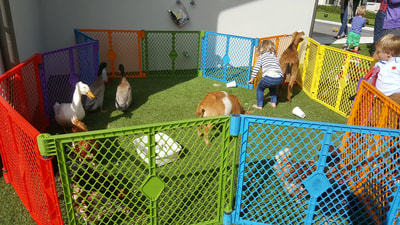
It can be argued that zoos like Chester, Paignton, Whippsnade and Colchester and safari parks like Longleat and Woburn Abbey have the sort of acreage to be in a position to deliver an enclosure that can give the animals what they need to have – room to roam, area to hide, room to interact with other individuals of their type or, indeed, to be solitary if that is a lot more appropriate. But then there’s nevertheless the question: are we keeping these animals right here for our own entertainment or is there a tangible advantage to them?
There are several higher profile and mainstream organisations that argue zoos, in a ideal globe, would be closed and conservation efforts focused on animals in the wild. The Born Free of charge Foundation argues that zoo-primarily based schemes that aim to breed animals in captivity and then release them into the wild are all but a myth. They say that there have only ever been 3 animals effectively reintroduced to the wild by British zoos: the partula snail, the British Field Cricket and Przewalski’s horse. Not a single primate or significant cat has ever created it to the wild from a British zoo. They go on to say that captive breeding programmes only exist to present zoos themselves with additional animals and have little or nothing to do with increasing numbers in the wild.
1 of Britain’s most famous conservationists, Chris Packham, takes a slightly distinctive strategy. He is a good believer in zoos, indeed his girlfriend runs one particular, but he believes they ought to focus their efforts on animals that they basically stand a opportunity of helping. He argues that pandas, tigers and other mega-fauna are also far gone to be saved. On this front I am inclined to agree in my day job I’m a geneticist and it really is widely acknowledged that you require at least 5,000 people to be interbreeding to guarantee the long term survival of a big mammalian species much less than two,000 and you are in significant difficulty. There are significantly less than 1,000 mountain gorillas left in the wild and there isn’t a singular breeding population of tigers that big either, so even if there wasn’t an additional tree cut down or animal hunted they only have a slow decline into disease and ill well being to appear forward to. It is not a comprehensive impossibility although cheetahs, my individual favourite, are so genetically related that you can graft skin from a single animal to yet another without fear of it becoming rejected. This can only be the case if at some point in their past there have been only a very little quantity of genetically equivalent animals left. Certainly, looking at the human genome has shown that at some point in pre-history there have been only 20,000 of us left – but then perhaps we’re a unique case.
Packham goes on to say that these huge, fluffy animals are emblematic of the struggle to conserve the environment and people today are far more probably to participate if there is some thing cute and fluffy to be saved. But the vast majority of the millions spent on conservation goes on just a tiny number of species. He argues that the income would be much better spent safeguarding the atmosphere they live in rather than any person species spending those millions on obtaining up tracts of rain forest would be a greater program that way you protect the atmosphere as a complete and the full variety of biodiversity within it.
On the other hand, there is a quite high chance that inside my lifetime quite a few of the larger mammals we all know and like will be extinct in the wild and if we do not have a breeding population in captivity then they just cease to exist and this, for quite a few, is reason adequate to validate the existence of zoos. It is just not adequate to have a few battered old examples in the All-natural History Museum and as excellent as David Attenborough’s documentaries are they can’t compete with seeing an animal in the flesh. It may perhaps be the case that we cannot teach a captive born animal how to survive on it really is personal in the wild, but if we never at least have a operating copy of the design then how will we ever make it work effectively? Zoos also work to make certain that the populations they have are outbred and retain their hybrid vigour by swapping animals for breeding internationally so if we did ever figure out how to train captive bred animals for life in the wild then we have a stock of animals ready to go. But give me 1 year and a million pounds and I could have that all arranged for you in a single freezer’s worth of tiny tubes.