
The invitation said to arrive at eight in the morning, and by eight fifteen the training hall was already alive. I had come to see what oil and gas simulation actually looks like when it is doing its job, not in a marketing video, but in a working training center where crews and students rotate through every day. What I found over the next few hours was a system that rewards curiosity, punishes carelessness, and teaches more about drilling in one session than months of classroom theory.
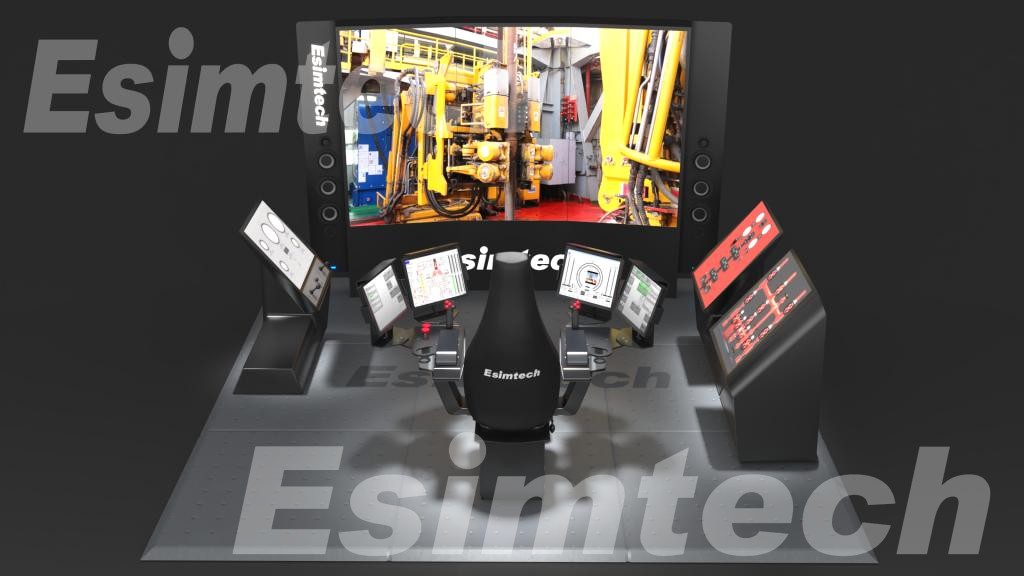
My guide for the day was the lead instructor, a man with twenty years on rigs who now spends his days in a windowless hall full of consoles. He started the tour with a simple demonstration: he loaded a routine drilling scenario, handed me the driller’s controls, and told me to keep the well stable. The console felt familiar from photographs, but the behavior was the surprise. The pumps sounded real, the standpipe pressure responded to the choke like the physics demanded, and when I made a small mistake with the mud balance, the consequences built quietly and then demanded attention.
Inside the Instructor Station
The most revealing part of the visit was sitting on the other side of the glass. From the instructor station, my guide took control of the scenario and demonstrated what the trainees never see: the ability to change formation permeability mid-exercise, inject a kick with a few keystrokes, and introduce an equipment failure just as a student settles into routine. The oil and gas simulation instructor station is effectively a scriptwriting tool for emergencies, and watching a drill instructor use it is like watching a director build tension in real time.
Then he froze the exercise and showed me the debrief screen. Every action I had taken was recorded, plotted, and annotated against the correct procedure, including the moment I hesitated before opening the choke. The class that followed was less a lecture than a forensic review, and I understood immediately why trainees who go through this process handle real pressure better when it matters.
The Scenarios Beneath the Surface
Between sessions, I asked how the scenario library was built. The answer revealed the depth behind the interface: scenarios are based on real operational events, adapted for teaching, and refined based on how hundreds of trainees have handled them. Routine operations, kick detection, stuck pipe, lost circulation, and full well control emergencies are all modeled with the oil and gas simulator physics engine that keeps the responses honest.
I also got to try the well control scenario that the instructor said catches everyone the first time. It caught me. I shut in the well, but my kill procedure was slow, and the simulator let the consequences develop until the instructor called time and walked me through where the response had drifted from best practice. It was not a comfortable experience, and that was exactly the point: the failure cost nothing but taught everything.
What the Visit Left Me Thinking
By the time the morning sessions ended, a class of new trainees had rotated through, each one leaving the console a little more confident than they arrived. The instructor’s parting comment stayed with me: the simulator does not replace experience, it compresses it, so that the mistakes happen on screen instead of on a rig, and the lessons stick because they are earned rather than explained.
Walking out of the training hall, I understood what the quiet intensity of the morning meant. Oil and gas simulation has grown from a teaching aid into a place where competence is actually built, one repeated exercise at a time. If you ever get the chance to sit at one of these consoles, take it, and try to keep the well stable. It is harder than it looks, and that is precisely what makes it worth doing.